What Is Time?
Metadata
Highlights
- The more closely we observe the present moment, the more amorphous it becomes. It vanishes as we reach out to touch it, transforming into the next moment, and the next … When we look out at the ocean, we naturally perceive the waves while understanding (both intellectually and intuitively) that there is no real “thing” that is a wave. The concept is useful shorthand for a dynamic phenomenon that occurs in nature. So too with the human brain, which is an ever-changing symphony of electrical firing among billions of neurons.
- Contrary to our everyday intuition, there isn’t an entity persisting through time in the form of a static “self.” All our conscious experiences are being generated anew by dynamic neuronal activity. Like an ocean wave, your “self” is an endlessly fluctuating process. Memories trail along from the past, and those memories impact your experience in this moment, but each moment of your experience still depends on the exact state of your brain at that particular point in time.
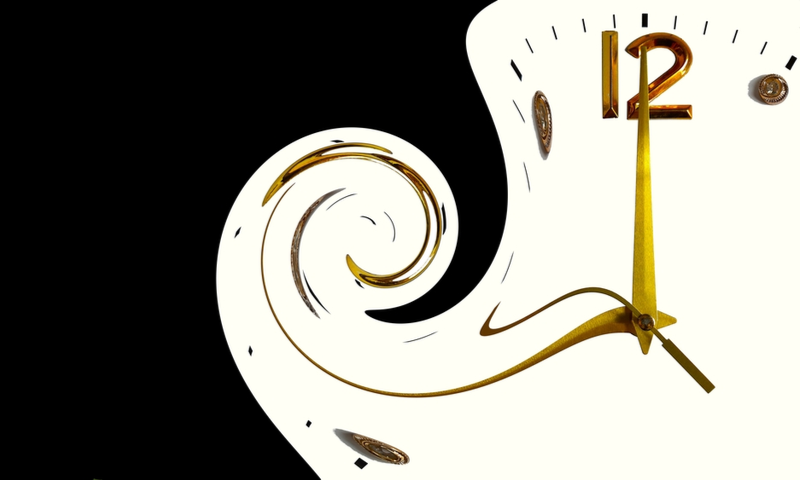
- We’re always residing in the here and now, yet each moment is instantaneously swept away by a ghostly breeze. There it goes. How long did it last? The more focused our attention is on our experience through time, the faster the moments rush by. A raging river. Yet, a vast, peaceful stillness rides along the never-ending stream. We are eternally racing toward the future—yet not moving at all. There’s no traveling forward when you are the river.
- In these musings I’m often left wondering to what degree our conscious experience of the flow of time is responsible for our confusion about it. Is it possible that experiencing a deeper structure of the universe is what we’re calling time? Are time and consciousness perhaps two sides of the same coin?